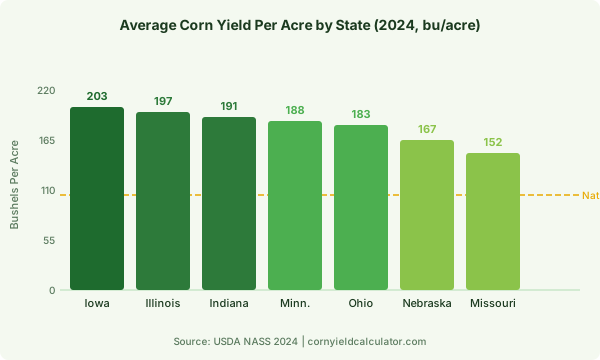
Average Corn Yield Per Acre by State: 2024 Data
See how your yield stacks up against state and national averages. USDA NASS 2024 data for every major corn-producing state and why they differ.
By Corn Yield Calculator Team · Last updated
Quick Answer
The U.S. average corn yield was 177.3 bushels per acre in 2024 (USDA NASS). Iowa led all states at approximately 203 bu/acre, while dryland production in Kansas and Nebraska averaged closer to 120–140 bu/acre depending on rainfall.
Knowing where your field stands against state and national benchmarks tells you something important: whether your management decisions are working. A 160 bu/acre yield in central Iowa signals a problem. That same number in eastern Colorado represents above-average performance. Context matters.
This guide breaks down 2024 corn yield averages by state, explains what drives the differences, and shows you how to use that data to set realistic targets for your own operation.
2024 U.S. Corn Yield: National Overview
USDA NASS reported the 2024 national average corn yield at 177.3 bushels per acre, up from 177.0 in 2023 and matching the record set in 2021. Total production reached approximately 15.1 billion bushels from 83.1 million harvested acres.
The national average includes everything from premium irrigated ground in Nebraska river valleys to dryland fields in marginal production areas. The number you actually care about is your state average, and then your county average, which will be tighter still.
Top Corn-Producing States and Their 2024 Yields
The Corn Belt leaders:
- Iowa: 203 bu/acre. Consistently one of the top two states. Deep glacial soils, adequate summer rainfall, and well-drained ground are the main advantages.
- Illinois: 197 bu/acre. Central Illinois has some of the deepest, most productive soils in the world. The south generally runs lower due to heavier clay content.
- Indiana: 191 bu/acre. Strong performance, though southern counties can lag due to poorer soils and higher humidity stress.
- Minnesota: 188 bu/acre. Strong corn genetics suited to shorter seasons. West-central Minnesota benefits from excellent soils and good corn-soybean rotation practices.
- Ohio: 183 bu/acre. Drainage tile investment over the past 30 years has dramatically improved yield potential in western Ohio's clay soils.
- Wisconsin: 175 bu/acre. More variable than core Corn Belt states due to soil type diversity, but top producers in the south hit 200+.
- Nebraska: 167 bu/acre, a tale of two production systems: irrigated ground along the Platte River averages 220+ bu/acre; rainfed fields in the western panhandle average 80–120.
Extended production areas:
- Missouri: 152 bu/acre. Heat and variable summer rainfall limit yield potential compared to states to the north.
- Kansas: 138 bu/acre. Primarily dryland production in the east; western Kansas yields are highly weather-dependent.
- South Dakota: 163 bu/acre. Eastern SD produces competitive yields; western counties average significantly less.
- Michigan: 172 bu/acre. Lower Michigan's thumb region rivals Indiana for yield potential; the upper peninsula is marginal.
Why Do State Averages Vary So Much?
Four main factors drive the gaps between high-yield and low-yield states.
Soil Quality and Drainage
Iowa and central Illinois sit on some of the most productive soils in the world: deep, well-structured loams and silty clay loams built from glacial parent material over thousands of years. These soils hold moisture during dry spells but drain quickly enough to prevent waterlogging.
Compare that to southern Missouri or eastern Kansas, where fragipan layers, rocky outcrops, and thin topsoil reduce water-holding capacity and restrict root growth. No amount of management fully compensates for poor soil structure.
Rainfall Distribution and Timing
Corn needs about 22–24 inches of water during the growing season, with the most critical demand during pollination and early grain fill (late June through mid-August). States with reliable summer rainfall and moderate temperatures, such as Iowa, Minnesota, and northern Illinois, consistently outperform states with hotter, drier summers.
A late-July drought during R1–R2 (silking and blister) can cut yield potential by 30–50% in a matter of days.
Irrigation
Nebraska's state average looks lower than Iowa's, but that masks a critical split: irrigated corn in the Platte Valley regularly exceeds 220 bu/acre. The same ground without irrigation might produce 100 bu/acre in a dry year. States with significant irrigated acreage, including Nebraska, Kansas, Colorado, and Texas, have highly variable county-level averages depending on groundwater access.
Hybrid Selection and Technology Adoption
States with large, well-capitalized operations tend to adopt new genetics and precision ag tools faster. Data-driven planting population decisions, variable-rate nitrogen application, and seed treatment packages can add 5–15 bu/acre over standard management in a given environment.
How to Benchmark Your Own Operation
Your county USDA FSA office can give you historical yield data at the county level, which is more relevant than the state average. The USDA NASS Quick Stats tool (nass.usda.gov) lets you pull county-level yield data going back decades.
For a more precise benchmark, compare your yields against neighbors with similar soil types and management. A local FSA yield consultant or university extension agronomist can help you identify whether your gaps are due to soil, management, genetics, or weather.
Once you know your current yield level, use our corn yield calculator to estimate fields before harvest, then compare your estimates to your combine monitor data. The gap between estimate and actual tells you a lot about where your sampling process can improve.
Setting Realistic Yield Goals
A common rule of thumb: your yield target should be 10–15% above your 5-year average (excluding extreme weather years). Chasing a state record on your first high-management attempt is a quick way to over-invest. A more sustainable approach is to close the gap between your average and your own best years.
If your 5-year average is 160 bu/acre but your best year was 195, the gap is your opportunity. Soil health, drainage, and hybrid selection are usually the biggest levers to investigate first.
Ready to estimate your own pre-harvest yield? Use our free field scouting tool to project bushels per acre from ear count, rows, and kernel data. For a deeper look at what drives yield variation, see our guide on 7 factors that affect corn yield.
Corn Yield Calculator Team
Agronomists and farmers building free, accurate crop scouting tools. Learn about our methodology →
Try the Corn Yield Calculator
Calculate corn yield per acre using ear count, kernel rows, and kernel weight data from your field.